Our engineering and manufacturing capabilities are U.S. based. Starting with the patient's biometric data and collaborating with the surgeon, we move rapidly from design to manufacturing.
This product is a custom device made to meet the specific needs of an individual patient or physician. It is not generally available and is subject to the FDA's Custom Device Exemption under Section 520(b) of the FD&C Act. This product is for prescription use only. This is not a substitute for standard medical devices and should be used only as directed by a qualified healthcare provider. Use is restricted to sale by or on the order of a physician. This device is a custom device and is subject to FDA Custom Device Exemption regulations.
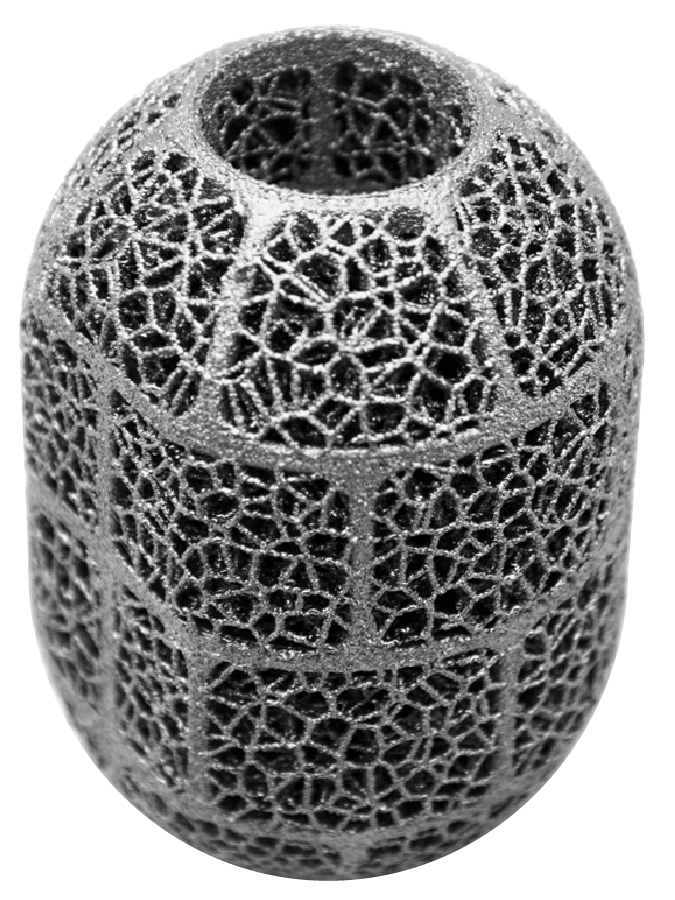
ALM Ortho's workflow is engineered for speed without compromise. Complex custom devices should not mean unacceptable lead times.
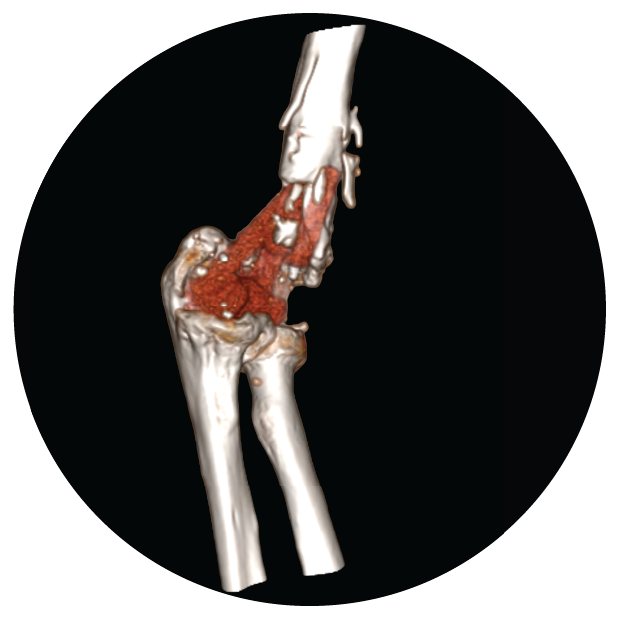
Patient needs are identified through the prescription form. Patient CT scans inform anatomy. A 3D anatomy model is created for planning and collaborative review with the surgeon.
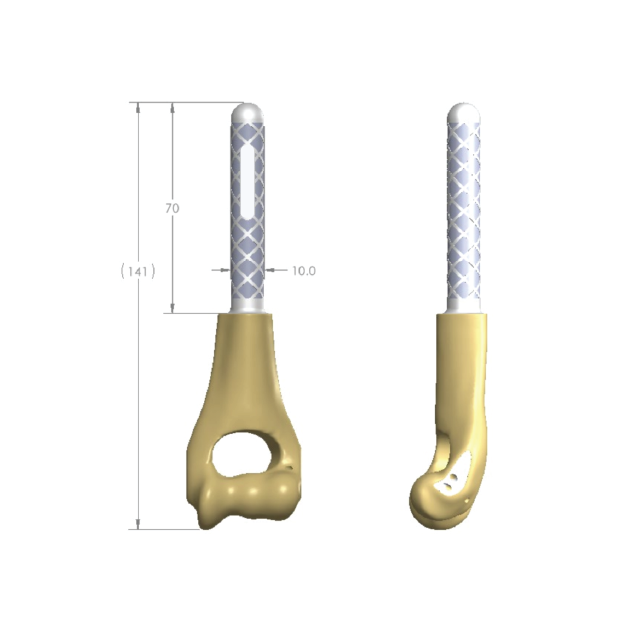
Using patient imaging data, engineers create a 3D anatomy model and develop a device specific to that patient. Design is reviewed collaboratively with the surgeon prior to release.
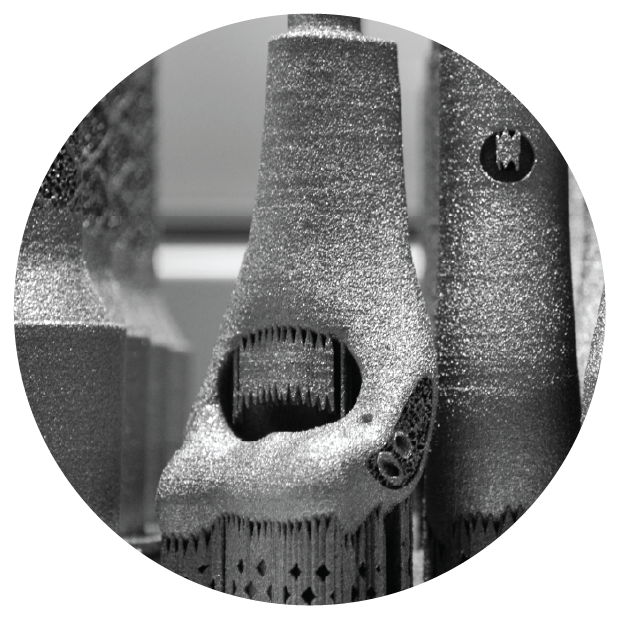
Approved designs are built on our GE Additive Arcam Q10plus EBM platform using medical-grade titanium (Ti-6Al-4V ELI). Secondary processes vary by complexity and include machining, TiN coating, and sequential quality assurance.
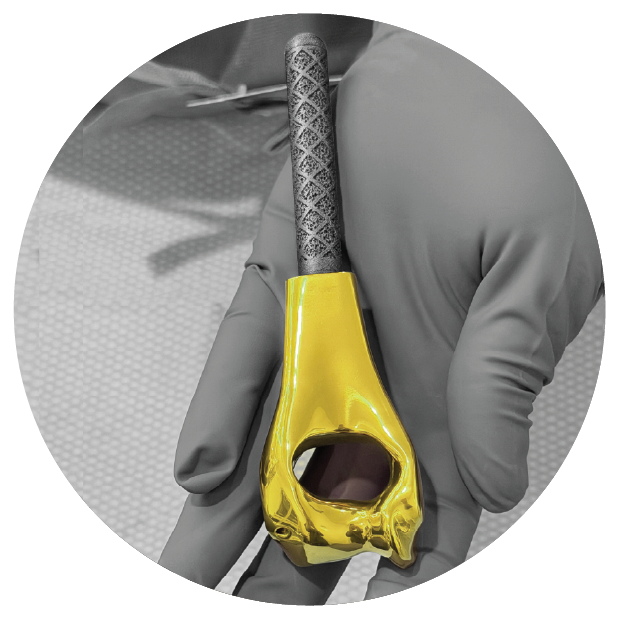
Patient-matched device(s), system components, and instrumentation packaged and shipped to the facility for surgery.
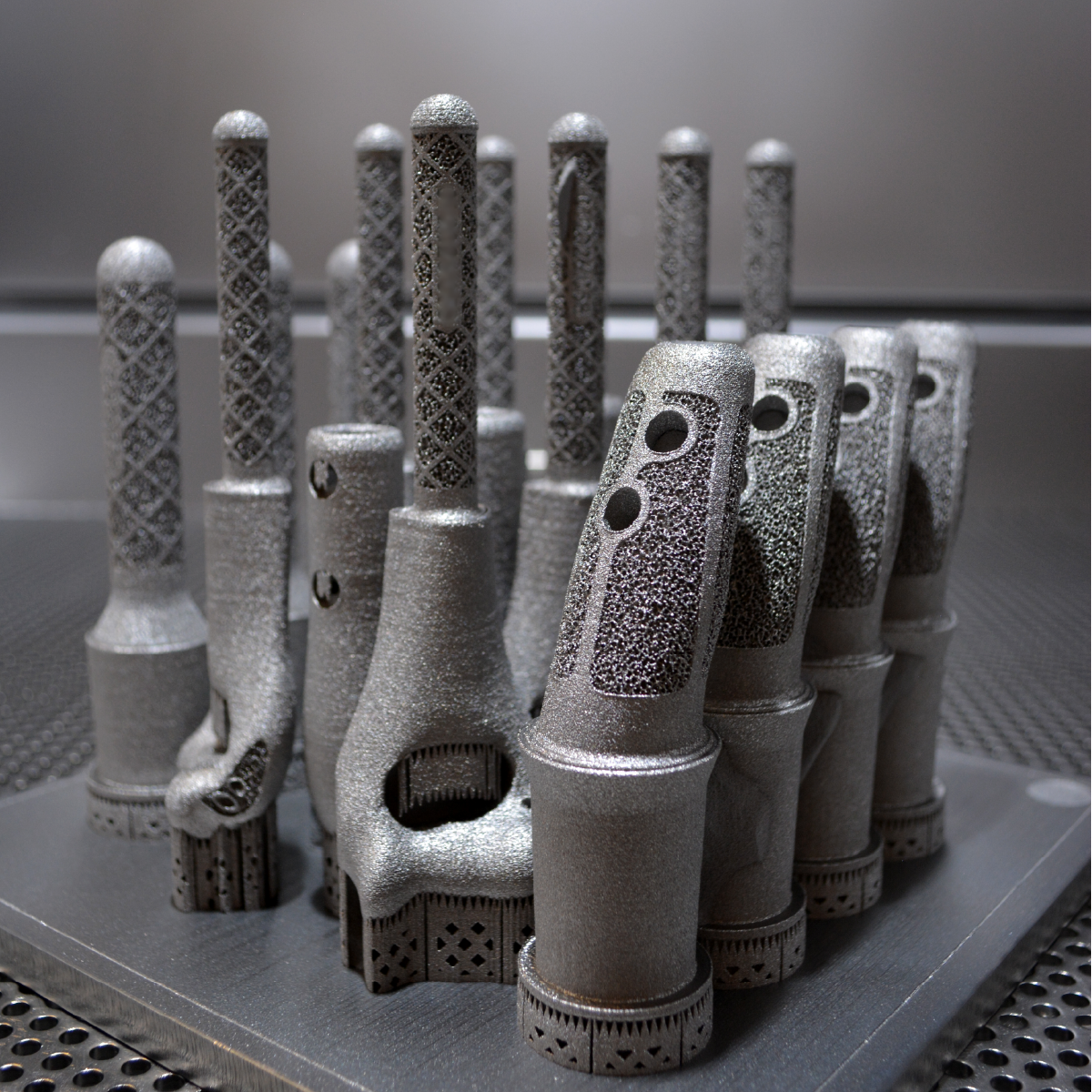
ALM Ortho's primary additive manufacturing platform uses Electron Beam Melting (EBM) technology — one of the most advanced metal Additive Manufacturing (AM) processes available for orthopedic applications.
A high-powered electron beam selectively melts titanium powder in a precisely controlled vacuum environment. Components are built layer by layer at temperatures that minimize residual stress — producing near-fully dense (≥99.8% relative density), high-strength devices with surface and structural properties engineered for bone integration (also known as osseointegration).
Titanium alloy Ti-6Al-4V ELI is the gold standard for additive manufacturing, offering a unique combination of properties that make it ideal for orthopedic applications and bone integration, also known as osseointegration.
Superior strength-to-weight ratio, exceptional biocompatibility, high corrosion resistance, and a tightly controlled morphology ensure consistent, repeatable results with every build.
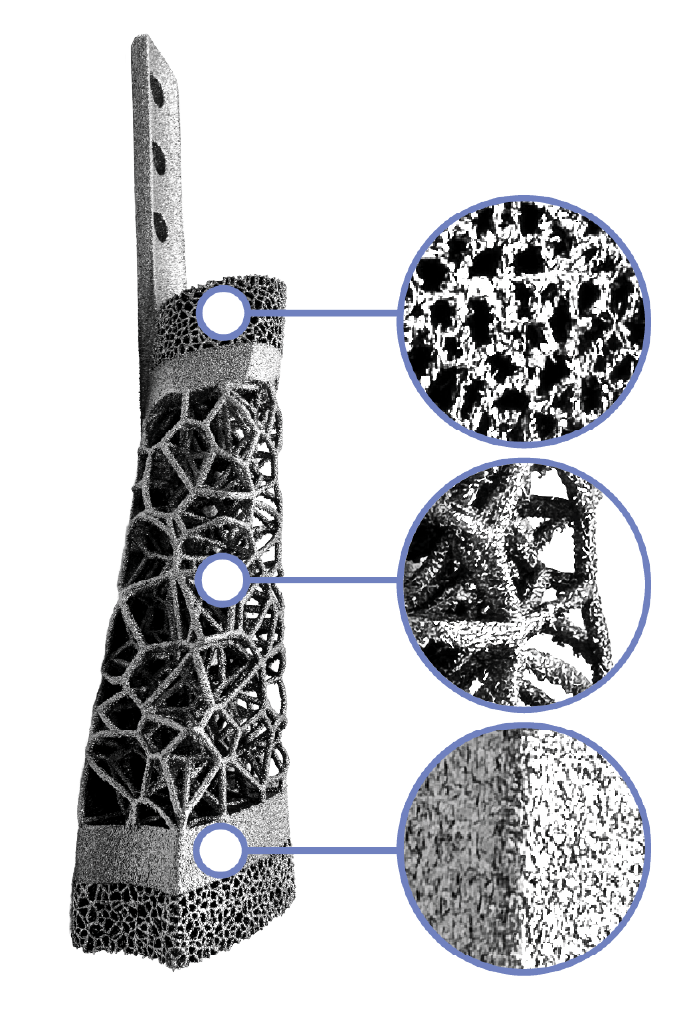

Patient CT data is processed to generate accurate 3D anatomy models. Design iterations are reviewed collaboratively with the surgical team to ensure every geometry decision reflects clinical intent.
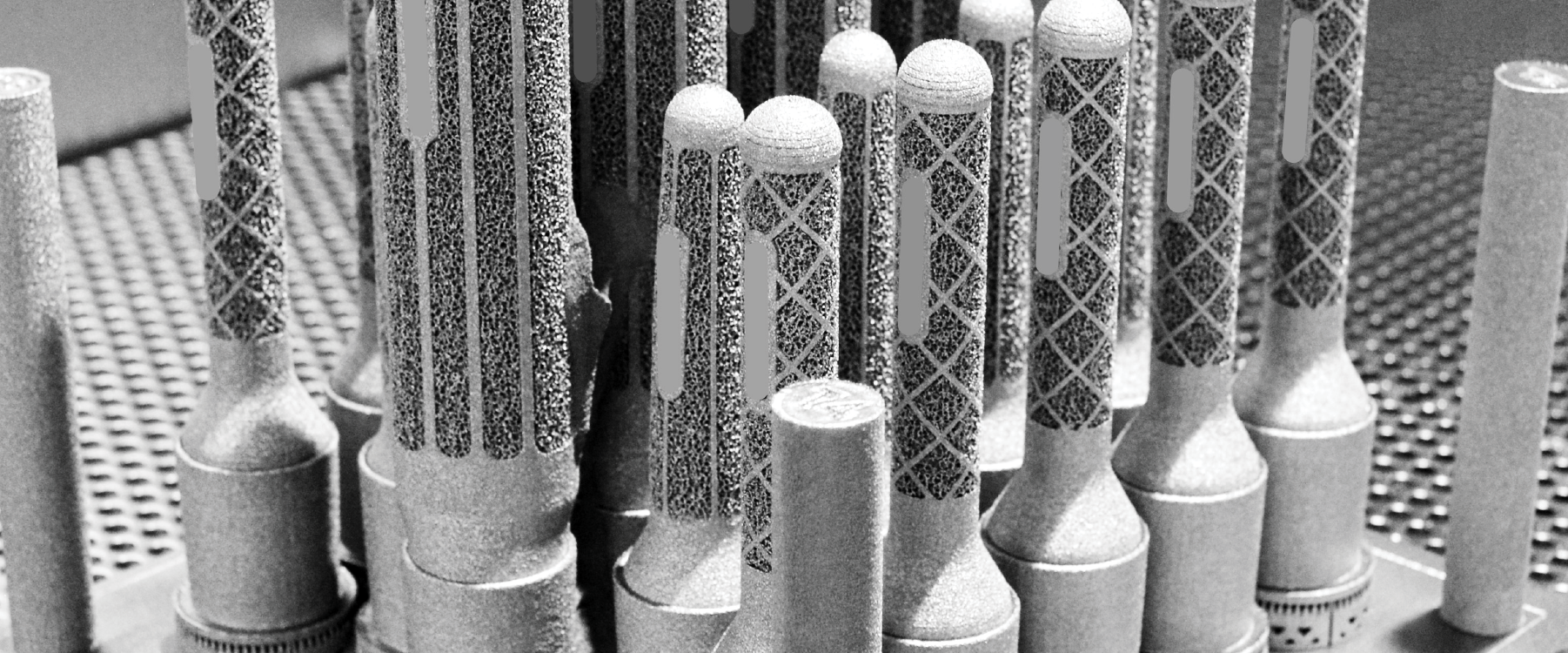
Vacuum environment minimizes contamination. Highly repeatable process supports the strict biocompatibility standards orthopedic devices require.

Every device goes through robust inspection assuring full traceability prior to leaving our facility.